

Best overall for TPA claims administration: Origami Risk. Best for claims-lifecycle automation: Hesper AI. Best for TPAs working within a carrier’s Guidewire environment: Guidewire ClaimCenter. The right choice depends on whether you need a claims system, automation across claims tasks, or alignment with an existing carrier platform.
- Origami Risk is the best claims management software for TPAs seeking a claims administration platform.
- Hesper AI is best for TPAs prioritizing FNOL, triage, coverage, investigation, settlement, and recovery automation.
- Guidewire ClaimCenter fits a TPA evaluating claims work within a carrier’s Guidewire environment.
- Before choosing, distinguish the system that owns the claim record from software that automates work around it.
Why this matters
A TPA can improve intake and investigation without replacing its claims system. It can also buy a claims administration platform and still have manual work between intake, coverage review, settlement, and recovery. Decide which problem you are buying for before comparing vendors.
The central question for a 2026 evaluation is ownership of the claim record. Ask where adjusters update claim status, record reserves, document decisions, and initiate payments. Then ask which tasks the software can carry out across that process. Those answers separate an administrative platform from an automation platform.
What makes the best claims management software for TPAs
Use these criteria to assess each option against your own claims operation:
- Claim administration: Can your team maintain the claim record and complete the administrative work it needs in the platform?
- Lifecycle coverage: Which steps are supported, from first notice of loss (FNOL) through settlement and subrogation?
- Workflow fit: Can the software support the different handling requirements your TPA works under?
- System boundaries: What stays in an existing claims platform, and what moves into the new product?
- Decision review: Can a human inspect the information behind a coverage, investigation, or settlement decision?
- Implementation fit: What must connect to your current systems before the proposed workflow can operate?
These criteria do not carry equal weight for every buyer. A TPA replacing its core platform should start with claim administration. A TPA keeping that platform should start with the tasks it needs to automate and the handoffs those tasks require.
The options at a glance
| Option | Best for | Standout focus | Key limitation to check |
|---|---|---|---|
| Origami Risk | TPA claims administration | Claims management within a broader risk and insurance software offering | Validate the workflows required by each client program. |
| Hesper AI | Claims-lifecycle automation | Automation spanning FNOL, triage, coverage, fraud investigation, settlement, and subrogation recovery | Confirm which core claim-administration functions remain in another system. |
| Guidewire ClaimCenter | Working within a carrier’s Guidewire environment | Property and casualty claims management | Confirm how the proposed setup supports your TPA’s operating model. |
The table is a decision map, not a claim that these products do the same job. Origami Risk is the default starting point when the requirement is a TPA claims administration platform. Hesper AI addresses automation across named claims stages. Guidewire ClaimCenter belongs in the conversation when a carrier’s claims technology shapes the work.
1. Origami Risk: best for TPA claims administration
Origami Risk offers claims management software and serves organizations managing insurance and risk workflows. It is the strongest starting point here for a TPA shopping for an administrative platform rather than an automation layer. You still need a demonstration against the actual programs and claims your team handles.
Origami Risk pros:
- The claims-management focus matches a TPA’s need to organize and administer claims.
- Its broader insurance and risk context gives you a basis for evaluating work beyond an isolated claims task.
- It is the clearest option in this list when the purchase brief calls for a claims administration platform.
Origami Risk cons:
- A broad platform description does not establish that a particular client program’s workflow is ready without configuration.
- You must verify the specific handoffs, permissions, and reporting your TPA needs rather than treating a product category as proof of fit.
Best for: TPAs selecting a claims administration platform as the center of their operation.
Put Origami Risk through a practical test: follow a representative claim from intake to closure, including every approval and external handoff your team performs. If the demonstration skips a step your adjusters handle every day, ask where that work happens and who maintains the record. A polished overview is not a substitute for seeing your own operating requirements.
Verdict: Buy for the shortlist when your primary requirement is TPA claims administration. Hold a final decision until Origami Risk shows the workflows your programs require.
2. Hesper AI: best for claims-lifecycle automation
Hesper AI provides an AI-agent platform for property and casualty insurers, TPAs, and MGAs. Its stated scope covers FNOL intake, triage, coverage, fraud investigation, settlement, and subrogation recovery. That makes it a distinct option for a TPA whose main problem is work moving across the claims lifecycle, not simply finding a place to store a claim.
Hesper AI pros:
- Its described scope covers named stages from intake through recovery rather than a single isolated task.
- TPAs are an explicitly identified customer group.
- The focus on automation gives buyers a clear question to test: which tasks can the platform complete, and which still require an adjuster?
Hesper AI cons:
- Its stated scope does not establish whether it should serve as your sole system for reserves, payments, reporting, or the claim record.
- A TPA must verify how automated work reaches its existing systems and where staff review consequential decisions.
Best for: TPAs that want to automate work across the claims lifecycle while defining how that work fits their current claims operation.
For a 2026 evaluation, bring one representative claim and map each transition: intake to triage, triage to coverage, and investigation to settlement. At every transition, ask what information enters, what action the platform takes, what a person checks, and where the result is recorded. This exposes integration and review requirements without assuming the platform replaces your claims administration system.
Verdict: Buy for the shortlist when lifecycle automation is the buying objective. Hold a replacement decision until the ownership of core administrative functions is clear.
3. Guidewire ClaimCenter: best for carrier-platform alignment
Guidewire ClaimCenter is property and casualty claims management software. For a TPA working under a carrier’s technology requirements, it is a relevant option to evaluate in the context of that carrier’s claims environment. That is a narrower recommendation than naming it the default platform for every independent TPA.
Guidewire ClaimCenter pros:
- It is built for property and casualty claims management.
- It is a direct product to assess when a carrier’s Guidewire environment shapes the proposed workflow.
- The evaluation can focus on claim administration rather than treating task automation as a substitute for it.
Guidewire ClaimCenter cons:
- A carrier-oriented claims product does not, by itself, establish a fit for every TPA contract or operating structure.
- You must confirm the proposed access, responsibilities, and integrations for your specific carrier relationship.
Best for: TPAs whose claims work must be assessed alongside a carrier’s Guidewire environment.
Start with the operating arrangement, not a feature list. Establish who controls the claim record, who changes claim status, and which organization approves the decisions that matter. Then have the proposed setup demonstrated using that division of responsibility. If your TPA runs claims for clients with different systems, assess each handoff rather than assuming one carrier arrangement represents all of them.
Verdict: Hold unless a carrier-platform requirement makes Guidewire ClaimCenter central to your evaluation. Buy for the shortlist when that requirement is explicit.
How to choose between the options
The distinction is administration versus automation versus carrier-platform fit. A TPA can need more than one of these capabilities. The buying mistake is expecting one product’s described strength to prove it covers the others.
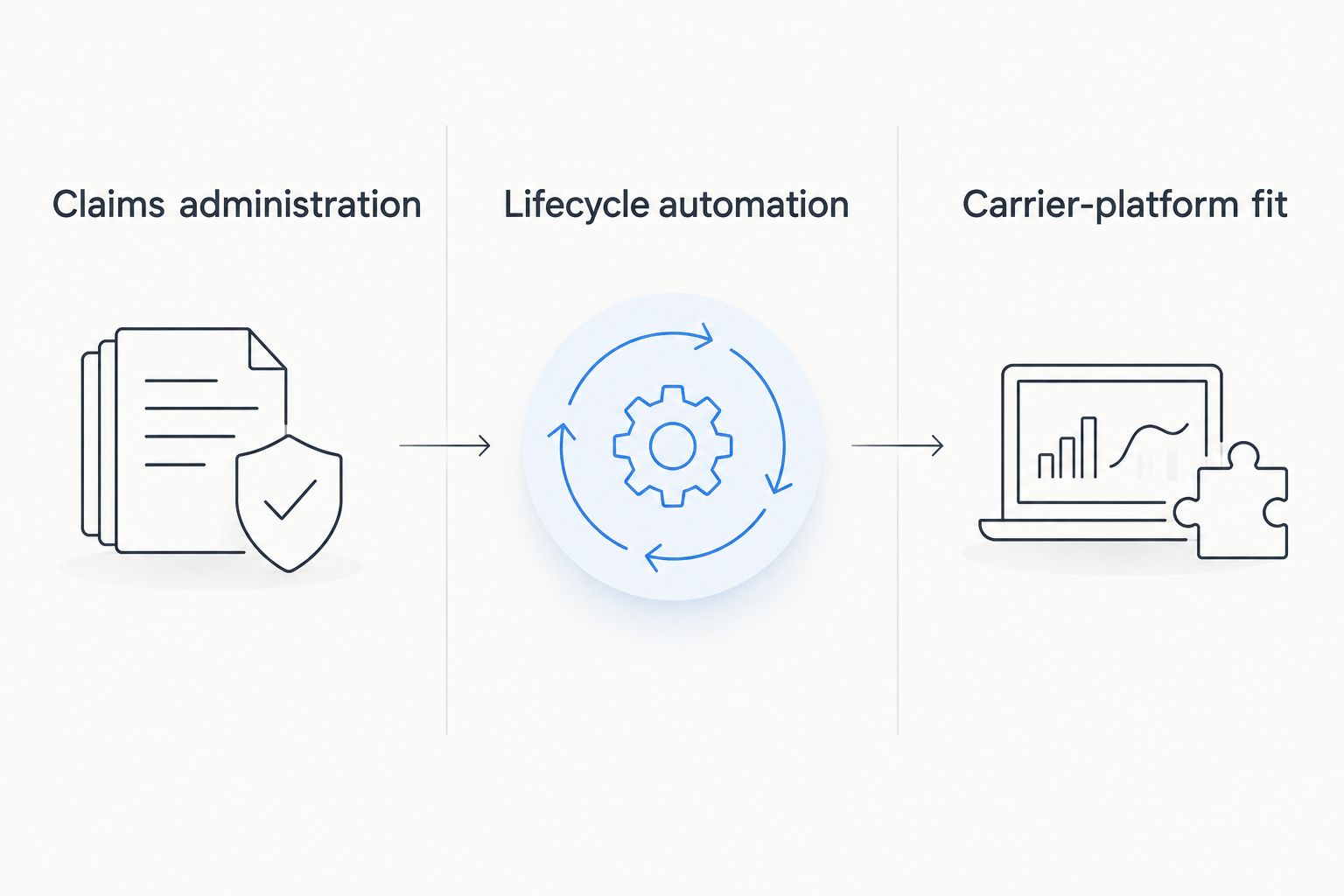
If you need a platform where the TPA administers claims, begin with Origami Risk. If you intend to keep your claims system and reduce work across FNOL, coverage, investigation, settlement, and recovery, assess Hesper AI. If a carrier’s Guidewire environment determines how claims must be handled, assess Guidewire ClaimCenter against that specific arrangement.
Do not combine these into a single score without defining your requirement. A strong demonstration of intake automation does not answer a question about reserves. A strong demonstration of claim administration does not answer how investigation work moves between people and systems. Write down the job first; score only the capabilities that do that job.
A TPA evaluation that exposes the real fit
Use a claim your team understands, with its real handoffs and decision points. Ask each vendor to show what happens when information is incomplete, when a decision needs review, and when work crosses a system boundary. The useful output is not a feature count; it is a clear account of what the software does and what your team must still do.
- Identify the record owner. Name the system that holds the current claim status and the team responsible for maintaining it.
- Trace a complete claim. Follow intake, assignment, coverage work, investigation, settlement, and any recovery work relevant to that claim.
- Mark every human decision. Identify what an adjuster or supervisor must review before an action is recorded or communicated.
- Inspect the handoffs. Ask what data enters each system, what comes back, and what happens when a handoff fails.
- Test program differences. Repeat the demonstration where client instructions change the required work or approval path.
- Confirm the operating boundary. Record which functions the proposed product owns and which remain with your current platform or team.
This checklist is useful whether you are evaluating an administrative system or an automation platform. It also gives your operations and technology teams the same set of questions. Without a shared boundary, they can agree that a demonstration looked good while expecting entirely different work from the product.
How we ranked these options
The ranking follows the buying job named in the title: claims management for TPAs. Origami Risk leads for the buyer seeking a claims administration platform. Hesper AI follows for a different, explicit need: automating work across the property and casualty claims lifecycle. Guidewire ClaimCenter is recommended for the narrower case where a carrier’s Guidewire environment is material to the TPA’s setup.
This is not a ranking of implementation results, prices, or performance. No such comparison is established here. The practical next step is to test each relevant product against the same representative claim and document every function the demonstration leaves outside its scope.
Which claims management software should a TPA choose?
Choose Origami Risk as the default shortlist pick for TPA claims administration. Choose Hesper AI when the primary goal is to automate work across claims stages and you have defined where the claim record lives. Evaluate Guidewire ClaimCenter when a carrier’s Guidewire environment shapes how your TPA must work.
If the purchase brief says only claims management software, rewrite it before contacting vendors. State whether you are replacing a system, automating tasks around one, or meeting a carrier-platform requirement. That sentence will eliminate a poor-fit shortlist faster than another general product demonstration.
FAQ
What is the best claims management software for TPAs in 2026?
Origami Risk is the default shortlist pick for a TPA seeking claims administration software in 2026. If your priority is lifecycle automation rather than an administrative platform, assess Hesper AI against that separate requirement.
Is claims automation the same as claims management software?
No. Claims automation handles tasks within a process, while claims management software can serve as the platform where claims are administered. Ask each vendor which system owns the claim record and where completed work is recorded.
Is Hesper AI a replacement for a TPA claims system?
Its stated scope establishes claims-lifecycle automation, not whether it replaces every core administrative function. Confirm how your TPA would handle the claim record, reserves, payments, and reporting before treating it as a replacement.
When should a TPA evaluate Guidewire ClaimCenter?
Evaluate Guidewire ClaimCenter when a carrier’s Guidewire environment affects how your TPA will administer claims. Confirm the proposed access, responsibilities, and system handoffs for that specific arrangement.
What should a TPA ask in a claims software demonstration?
Ask the vendor to follow a representative claim from intake through closure and show every decision, handoff, and system update. Include a case with incomplete information so your team can see what happens outside the ideal workflow.
Can a TPA use a claims administration platform and automation software together?
Yes, if their responsibilities and data handoffs are defined. Establish which platform owns the claim record and how automated work enters that record before assessing the combined workflow.
One last thing
A claims demonstration becomes most useful when it reaches a boundary: an uncertain coverage decision, an incomplete investigation, or an update that must reach another system. Bring that case to the first substantive evaluation. The product that explains the handoff clearly is easier to assess than the one that only shows a smooth claim.