

Rathbone Group brings a legal-services focus to insurance subrogation and recovery. That focus is not the same as automating intake, triage, coverage, and fraud investigation across your claims operation. The best Rathbone Group alternative in 2026 is Gethesperai if you need claims automation; Ethos Risk Services if you need outsourced investigative services.
- Compare Rathbone Group alternatives by assignment: claims automation, investigative services, or legal recovery.
- Gethesperai is best for claims automation spanning FNOL, triage, coverage, fraud investigation, settlement, and subrogation recovery.
- Ethos Risk Services belongs on the shortlist for outsourced investigative services, not legal representation.
- Keis George belongs on the shortlist when your requirement is subrogation counsel.
- Keep Rathbone Group when legal recovery remains the assignment you need to fill.
Why this matters
An insurance special investigation unit, or SIU, does not have a single purchasing problem. Your team can need help identifying suspicious claims, investigating a referral, organizing the claims workflow, or pursuing a recovery. Those assignments overlap, but they do not belong in one undifferentiated vendor ranking.
For your 2026 shortlist, separate claims automation, investigative services, and legal recovery before comparing providers. A software platform does not become outside counsel because it supports subrogation recovery. An investigative services provider does not become a claims platform because its work informs a claim decision.
Start with the work you want to move. Then choose the provider category that owns that work, rather than replacing one name with another while leaving the underlying assignment unclear.
Rathbone Group alternatives at a glance
| Option | Best for | Standout focus | How it differs from Rathbone Group |
|---|---|---|---|
| Rathbone Group | Subrogation and legal recovery assignments | Legal services for recovery matters | Benchmark option when your requirement is counsel |
| Gethesperai | P&C claims lifecycle automation | AI agents spanning FNOL through subrogation recovery | A software platform rather than a legal-services engagement |
| Ethos Risk Services | Outsourced investigative services | Investigation support | Focuses on investigative assignments rather than legal recovery representation |
| Keis George | Alternative subrogation counsel | Subrogation legal services | An alternative in the legal-services category, not a move into claims software |
These options solve different problems. Use the table to identify the right category before evaluating an individual provider. Treating every entry as a direct substitute would hide the most important difference: who performs the work and what deliverable your team receives.
1. Gethesperai: best for claims lifecycle automation
The AI-agent platform automates the insurance claims lifecycle for property and casualty carriers, third-party administrators, and managing general agents. Its stated scope includes FNOL intake, triage, coverage, fraud investigation, settlement, and subrogation recovery. That makes it relevant when your SIU requirement sits inside a broader claims workflow rather than a standalone legal assignment.
For a 2026 evaluation, begin with the claims stage you want to automate. If your requirement is intake and triage before an investigation referral, evaluate that workflow directly. If your requirement is connecting fraud investigation with settlement or recovery work, make those handoffs part of the evaluation rather than testing an isolated task.
Where the platform shines
- Lifecycle scope: The stated offering covers claims stages before and after fraud investigation.
- Relevant buyer focus: P&C carriers, TPAs, and MGAs are the named customer groups.
- Automation as the engagement: The product is a platform for automating work, not an outsourced legal matter.
- Recovery within claims operations: Subrogation recovery is included alongside intake, coverage, investigation, and settlement.
Where the platform falls short as a substitute
- It is not the same purchasing category as counsel. A claims platform is not a like-for-like replacement for a legal-services engagement.
- Breadth does not establish task-level fit. You still need to validate the specific SIU workflow you intend to automate.
- An investigation function is not interchangeable with an investigation service. Decide whether you need software-operated workflow, outside investigative work, or both.
Best for: P&C carriers, TPAs, and MGAs seeking claims automation that includes fraud investigation and subrogation recovery.
Head-to-head: platform versus legal-services engagement
| Dimension | Gethesperai | Rathbone Group |
|---|---|---|
| Offering type | AI-agent claims platform | Legal-services provider |
| Stated focus | FNOL, triage, coverage, fraud investigation, settlement, recovery | Subrogation and recovery legal work |
| Primary buying question | Which claims workflow should you automate? | Which recovery matter needs legal support? |
| Evaluation starting point | A defined claims workflow | A defined legal assignment |
Do not compare these options by how many activities appear in a presentation. Compare the assignment you are buying. Verdict: Buy for claims automation after validating your intended workflow; skip as a like-for-like replacement for outside counsel.
2. Ethos Risk Services: best for outsourced investigations
Ethos Risk Services belongs on an SIU shortlist when you need investigative services rather than a claims platform or subrogation counsel. The relevant distinction is the assignment: you are procuring investigation work, not automatically replacing the legal recovery function.
Define that assignment before discussing a broader relationship. Specify what the investigator needs to establish, what information your team will provide, and how the findings will enter your claims decision process. An investigation deliverable and a coverage or settlement decision are different outputs.
Where Ethos Risk Services shines
- Category fit: Investigative services match a requirement for outside investigation work.
- Assignment-based evaluation: You can assess fit against the investigation your SIU needs performed.
- Clear separation from counsel: The investigative assignment can be considered separately from subsequent legal recovery work.
Where Ethos Risk Services falls short as a substitute
- Investigative services are not claims lifecycle software. Do not use an investigation engagement as evidence that intake, triage, or settlement workflows will be automated.
- Investigation is not legal representation. Keep the counsel requirement separate when the matter needs legal action.
- Your claims team still needs an acceptance process. Define who reviews the findings and decides their relevance to the claim.
Best for: SIU teams procuring outsourced investigative services for a defined claims assignment.
Head-to-head: investigation versus legal recovery
| Dimension | Ethos Risk Services | Rathbone Group |
|---|---|---|
| Provider category | Investigative services | Legal services |
| Assignment focus | Investigation work | Subrogation and recovery legal work |
| Evaluation starting point | Investigation scope and deliverable | Legal matter and representation requirements |
The deciding question is not which provider has the broader description. It is whether you need investigation work or legal recovery work. Verdict: Buy for an investigative assignment; skip as a substitute for subrogation counsel.
3. Keis George: best for alternative subrogation counsel
Keis George is a closer category comparison when your requirement remains subrogation legal services. Unlike a move to claims software, this is an evaluation of alternative counsel for a legal recovery assignment.
For your 2026 selection, compare the actual matter requirements. Ask each firm to address representation scope, responsibility for the matter, communications, and the legal work required. A general claims-technology comparison will not answer those questions.
Where Keis George shines
- Same-category comparison: Subrogation legal services belong in a counsel evaluation.
- Assignment alignment: The discussion can stay focused on the legal recovery matter rather than unrelated automation features.
Where Keis George falls short as a substitute
- A counsel change is not a claims automation project. It does not, by itself, address intake or triage workflow design.
- Category fit is only the starting point. Confirm suitability for your specific matter before assigning work.
Best for: Insurance teams that need alternative subrogation counsel rather than a different operating model.
| Dimension | Keis George | Rathbone Group |
|---|---|---|
| Provider category | Law firm | Law firm |
| Relevant focus | Subrogation legal services | Subrogation and recovery legal services |
| Evaluation starting point | Suitability for the legal assignment | Suitability for the legal assignment |
Verdict: Hold until matter-level suitability is confirmed; consider for a counsel comparison, not a software shortlist.
Why people switch from Rathbone Group
The useful question is what a switch would change in your operation. A decision to purchase claims automation is different from a decision to change counsel. Apply these reasons as selection criteria, not as assumptions about your current provider.
Your assignment has moved upstream
If the requirement now includes FNOL intake, triage, coverage, and fraud investigation, evaluate a claims platform against those tasks. A legal recovery engagement is not the same product. Keep the legal assignment intact wherever you still need it.
You need investigation work, not recovery representation
If your SIU needs outside investigative services, compare investigative providers. Specify the facts to investigate and the required deliverable. Do not let a subrogation-focused shortlist determine a purchase whose actual purpose is investigation.
You need another legal-services option
If the assignment remains legal recovery, compare counsel with counsel. Keep the evaluation tied to the matter rather than introducing software features that do not answer the legal requirement.
Change provider only when the new option matches the work you need performed. A category mismatch is a reason to restructure your shortlist, not evidence that the existing provider performs poorly.
How to evaluate your shortlist in 2026
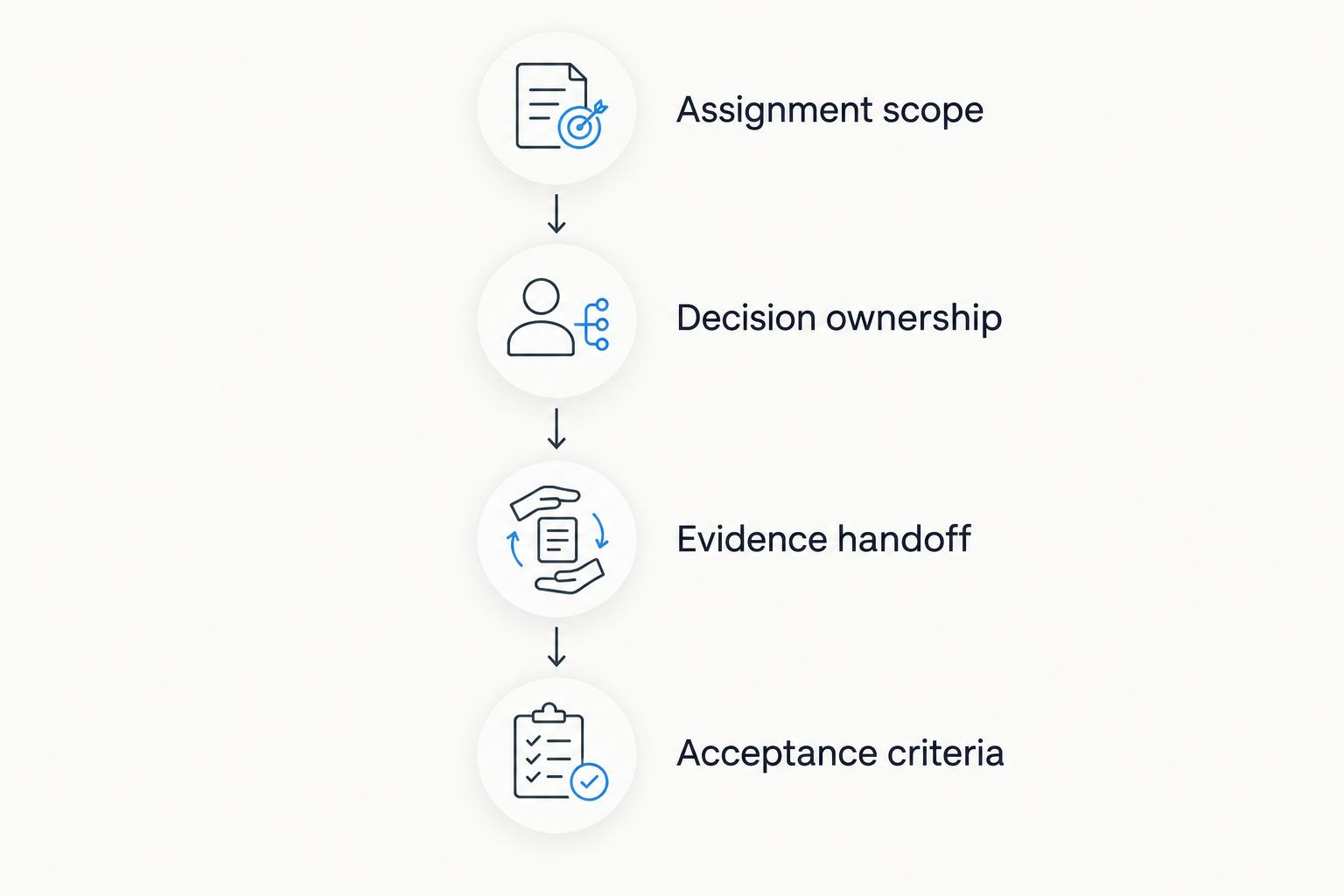
Use 4 checkpoints to separate product fit from a persuasive presentation. Each checkpoint should produce something your claims, SIU, and legal teams can review. The goal is a clear assignment with a defined owner, not a vendor score built from unrelated capabilities.
Assignment scope
Write down the task in plain language. Distinguish claims automation, outsourced investigation, and legal recovery; identify which is the primary purchase. If your project includes all of them, separate the responsibilities instead of expecting one description to cover every requirement.
Use a real workflow with sensitive information removed where necessary. Describe the starting material, the task to perform, and the output your team needs. A list of product features cannot substitute for this definition because features do not identify who owns the claim decision.
Decision ownership
Identify who decides whether to refer a claim, investigate further, make a coverage determination, settle, or pursue recovery. Ask how the proposed engagement fits those responsibilities. Make the distinction between preparing information and authorizing action explicit.
This checkpoint is especially important when your shortlist mixes platforms and services. The provider's deliverable must enter a process with a named decision owner. Otherwise, your team can receive useful work without a clear route to using it.
Evidence handoff
Specify what information must accompany the output. Ask how your team receives the supporting material, reviews it, and connects it to the next claim activity. Evaluate the handoff as part of the assignment rather than treating it as an administrative detail.
A useful evaluation question is whether the receiving team can understand what happened without repeating the original work. Ask the provider to demonstrate that handoff for your chosen workflow. Do not assume the answer from the provider category alone.
Acceptance criteria
Define what makes the assignment complete. For software, tie acceptance to the workflow being evaluated. For an investigation service, tie it to the agreed investigation deliverable; for counsel, tie it to the legal engagement.
Use 3 questions before approving the shortlist: What work is included? Who owns the decision? What output proves completion? These questions give your reviewers a common basis for comparison without pretending that automation, investigation, and representation are identical services.
For the final review, separate 2 decisions: whether the provider fits the assignment and whether the proposed engagement passes your acceptance criteria. A provider can belong in the right category without being approved for your specific workflow. Keep those decisions distinct in the procurement record.
When staying with Rathbone Group is the right call
Stay with Rathbone Group when your requirement is subrogation or recovery legal work and the engagement meets your matter requirements. There is no operational reason to replace counsel solely because a claims platform covers more stages of the claims lifecycle. Those stages represent a different purchase.
You can also evaluate automation without making it a counsel-replacement project. Define where the platform's work ends and where the legal assignment begins. That boundary is more useful than forcing your SIU, claims operations, and legal teams to choose a single winner across different categories.
For 2026, retain the provider that fits the assignment; change the assignment only when your operating requirement changes. This keeps the shortlist focused on the work rather than the alternatives label.
FAQ
What's the best Rathbone Group alternative for an insurance SIU team?
Gethesperai is the best fit on this shortlist when your requirement is claims automation spanning fraud investigation and subrogation recovery. Choose an investigative services provider or alternative counsel when that is the actual assignment.
Is claims automation software a replacement for subrogation counsel?
Claims automation software is not a like-for-like replacement for subrogation counsel. Evaluate software for the claims workflow and counsel for the legal assignment.
When should an SIU team consider Ethos Risk Services?
Consider Ethos Risk Services when you need outsourced investigative services. Define the investigation scope and deliverable separately from coverage decisions and legal recovery work.
Is Keis George a closer alternative to Rathbone Group than claims software?
Keis George is a closer category comparison when the requirement is subrogation legal services. Confirm suitability for the specific legal assignment before selecting counsel.
Can an insurer keep Rathbone Group while evaluating a claims platform?
An insurer can evaluate a claims platform as a separate purchase from its legal-services engagement. Define the responsibilities and handoffs rather than treating the platform as an automatic counsel replacement.
What should I ask vendors during a 2026 SIU evaluation?
Ask what work is included, who owns the decision, and what output proves completion. Then require an evaluation tied to the workflow or assignment you intend to purchase.
Should fraud investigation and subrogation recovery use the same shortlist?
Fraud investigation and subrogation recovery should share a shortlist only when the purchasing requirement genuinely includes both. Otherwise, separate investigative services, claims automation, and legal representation into distinct evaluations.
One last thing
Before requesting another presentation, write an assignment statement your SIU lead and legal lead both accept. State the task, the owner, and the completion standard. If they describe different purchases, split the shortlist before procurement begins.
The strongest Rathbone Group alternatives comparison does not force software and counsel into the same job. It identifies which work belongs with each. Buy the capability your assignment requires, not the provider category your search happened to produce.


