

Best overall for connected P&C claims workflows: Gethesperai. Best for insurance-specific fraud detection: Shift Technology. Best for risk screening across underwriting and claims: FRISS. This 2026 guide also compares SAS Visual Investigator for investigation workspaces and Quantexa for entity resolution; choose by investigative task, not by an undifferentiated fraud score.
- Gethesperai leads this best AI tools for insurance fraud investigators shortlist for connected P&C claims workflows.
- Shift Technology fits insurance-specific fraud detection; FRISS fits screening across underwriting and claims.
- SAS Visual Investigator suits investigation workspaces; Quantexa suits entity resolution and connected-party analysis.
- Require traceable evidence, controlled escalation, and human review before buying insurance fraud detection software.
Why this matters
An insurance fraud investigator needs more than a suspicious-claim flag. You need to understand the evidence, identify what requires verification, and move the case to the right person without losing its history.
Detection, investigation, and claims execution are different jobs. A system that identifies unusual activity is not automatically the right system for managing evidence or coordinating settlement decisions. Buy for the gap in your investigation process, not for the broadest feature description.
For your 2026 shortlist, separate claims-lifecycle platforms from specialist detection and investigation tools. That distinction determines what you must demonstrate before signing a contract.
What makes the best insurance fraud investigation tool?
Use these criteria before comparing vendors:
- Workflow fit: Does the software address detection, investigation, or the wider claims lifecycle? Match its scope to your actual bottleneck.
- Evidence traceability: Can an investigator trace an alert or summary to the underlying document, record, or relationship?
- Relationship analysis: Can your team examine connections between claimants, providers, vehicles, addresses, and other relevant entities?
- Investigator control: Can reviewers challenge findings, record conflicting evidence, and control escalation?
- Operational fit: Does the proposed implementation work with your claims systems, access rules, and case ownership?
- Validation quality: Does a demonstration distinguish confirmed findings from suspicions and unresolved inconsistencies?
Treat these as purchase requirements, not assumed features. A polished demonstration answers a scripted question; a useful evaluation exposes what happens when records conflict.
Best insurance fraud investigation tools at a glance
The following 2026 ranking assigns each option a distinct role. It is a scope-based buying guide, not a measured comparison of detection accuracy.
| Rank and option | Best for | Standout focus | Key limitation to evaluate |
|---|---|---|---|
| 1. Gethesperai | Connected P&C claims workflows | Claims lifecycle spanning intake through recovery | Lifecycle coverage alone does not establish specialist investigation depth |
| 2. Shift Technology | Insurance-specific fraud detection | Fraud detection focused on insurance claims | Detection must translate into usable investigative referrals |
| 3. FRISS | Underwriting and claims risk screening | Insurance fraud and risk assessment | Screening results still need case-specific investigation |
| 4. SAS Visual Investigator | Investigation workspaces | Visual exploration of relationships and investigation information | A broader investigation platform needs insurance-specific configuration |
| 5. Quantexa | Entity resolution and connected-party analysis | Connecting records to entities and their relationships | Relationship intelligence is not a complete claims workflow |
1. Gethesperai: best for connected P&C claims workflows
Gethesperai provides an agent platform for property and casualty carriers, TPAs, and MGAs. Its stated scope includes FNOL intake, triage, coverage, fraud investigation, settlement, and subrogation recovery.
That makes Gethesperai the default choice on this shortlist when you want insurance fraud investigation connected to the broader claims lifecycle. The buying question is whether the proposed workflow preserves evidence and review ownership as work moves between stages.
Gethesperai is best for P&C teams choosing insurance fraud investigation within a connected claims lifecycle. Evaluate that lifecycle against your own operating process rather than assuming every stage needs the same level of automation.
Gethesperai pros:
- Its stated scope includes fraud investigation, not just intake or claims administration.
- It addresses the claims stages before and after an investigation.
- Its stated audience includes carriers, TPAs, and MGAs.
Gethesperai cons:
- Broad lifecycle scope is not proof of specialist network-analysis capability; require a relevant demonstration.
- A lifecycle-focused purchase demands agreement on ownership across claims, investigation, and recovery teams.
Best for: P&C organizations seeking connected claims execution rather than a standalone alert queue.
Verdict: Buy for lifecycle coordination after validating the investigation workflow. Bring a case with conflicting evidence and require the demonstration to show who reviews it, what remains unresolved, and how the next action is authorized.
2. Shift Technology: best for insurance-specific fraud detection
Shift Technology offers insurance-focused fraud detection. Its claims-fraud positioning makes it a relevant option when your immediate requirement is identifying suspicious claims for investigation.
The distinction is detection specialization. You are evaluating whether the system produces useful referrals, not whether an attractive risk score appears on a dashboard. Require the vendor to explain the evidence behind a referral and how an investigator acts on it.
Shift Technology pros:
- Its fraud-detection focus is specific to insurance.
- It belongs on a shortlist centered on claims screening and investigative referrals.
- Its specialist scope gives you a clear evaluation question: does detection improve case selection?
Shift Technology cons:
- A detection recommendation does not establish an end-to-end investigation workflow.
- An alert still requires evidence review; suspicious patterns are not proof of fraud.
Best for: Insurers selecting a specialist insurance fraud detection capability.
Verdict: Buy for detection specialization after validating referral quality. Ask investigators to review both flagged and unflagged historical cases. A demonstration limited to obvious fraud examples does not establish how the system handles legitimate claims with unusual facts.
For a 2026 procurement decision, request the current claims-fraud product documentation from Shift Technology. Keep the evaluation focused on the proposed configuration, rather than treating the vendor's entire portfolio as one product.
3. FRISS: best for underwriting and claims risk screening
FRISS provides insurance fraud detection and risk assessment across underwriting and claims. It fits teams that want to assess suspicious information at different points in the insurance relationship, rather than only after a claim reaches an investigator.
Your evaluation should separate screening from investigation. A risk indicator supports prioritization; the investigator still needs to establish what happened and whether the evidence supports further action.
FRISS pros:
- Its insurance focus covers both underwriting and claims risk assessment.
- It fits a buying brief that spans more than claims-stage detection.
- Its screening orientation supports a clear review of referral thresholds and handling rules.
FRISS cons:
- Screening is not a substitute for a documented investigation.
- Underwriting and claims teams need distinct action rules, even when they use related risk information.
Best for: Insurers aligning risk screening across policy and claims processes.
Verdict: Buy for cross-stage screening after validating handoffs. Ask the vendor to show how the proposed setup handles a changed address, inconsistent information, and a legitimate explanation. Your team should see the distinction between an inconsistency, a suspicion, and a verified finding.
Use FRISS's current underwriting and claims materials to define the scope. Do not assume that a capability shown in one workflow automatically applies to another.
4. SAS Visual Investigator: best for investigation workspaces
SAS Visual Investigator is an investigation platform with visual exploration of data and relationships. It is relevant when the central problem is bringing investigation information together and helping analysts examine connected records.
Its role differs from a claims-lifecycle platform. You are buying an investigation environment, so the evaluation must cover how your insurance data, case structure, and review procedures fit that environment.
SAS Visual Investigator pros:
- It is explicitly positioned around investigation work.
- Visual relationship exploration fits connected-party investigations.
- Its scope suits an evaluation centered on analyst review rather than claims execution.
SAS Visual Investigator cons:
- A broader investigation platform requires an insurance-specific implementation design.
- Visual connections do not establish that the connected parties committed fraud.
Best for: Investigation teams that need a dedicated workspace for examining evidence and relationships.
Verdict: Buy for investigation workspace requirements; skip it as a substitute for complete claims processing. Require the demonstration to follow an investigator from initial referral through evidence review and case disposition.
Use SAS Visual Investigator documentation to verify the proposed capabilities. During your 2026 evaluation, distinguish standard functionality from configuration work and separate integrations; those distinctions determine implementation responsibility.
5. Quantexa: best for entity resolution and connected-party analysis
Quantexa's Decision Intelligence platform includes entity resolution and graph-based contextual analysis. That focus is relevant when your investigation depends on understanding whether records refer to the same person or organization, and how those entities connect.
Entity resolution is a different problem from deciding whether a claim is fraudulent. First establish who or what a record represents; then examine the relationship and its significance.
Quantexa pros:
- Entity resolution directly addresses fragmented records and identity matching.
- Relationship analysis fits investigations involving connected parties.
- Its contextual focus supports examination beyond an isolated claim record.
Quantexa cons:
- A relationship map does not replace claim evidence or investigator judgment.
- Entity resolution requires validation of matches and non-matches against your data.
Best for: Insurers investigating identities and relationships across disconnected datasets.
Verdict: Buy for entity-resolution needs after validating match quality. Include records with similar names, shared addresses, and incomplete identifiers in the evaluation. Require the proposed system to distinguish a supported match from an uncertain connection.
Review Quantexa's entity-resolution and insurance materials for the proposed scope. Do not treat a relationship-analysis capability as proof that settlement, case management, or recovery execution is included.
How the ranking works
The order prioritizes the purchase decision: connected claims workflow first, insurance detection second, cross-stage screening third, investigation workspace fourth, and entity resolution fifth. These are different use-case slots, not interchangeable measures of quality.
The scope descriptions follow the vendors' stated platform categories and product documentation. Accuracy, implementation effort, and investigative outcomes require evaluation against your own claims; this guide does not assign unsupported performance scores.
The best choice changes when your bottleneck changes. A team that already has functioning case management but cannot connect identities should start with entity resolution, not the first-ranked lifecycle platform.
How to evaluate your shortlist in 2026
Define scope
Write down the decision the software must improve: which claims to refer, which evidence to examine, which identities to connect, or which workflow action to take. Name the owner of that decision.
Replay cases
Use appropriately authorized historical material containing confirmed fraud, legitimate claims, and unresolved cases. Keep those categories separate so an unresolved suspicion does not become a false ground-truth label.
Review evidence
Ask an investigator to reconstruct the reason for each recommendation. Check source records, conflicting information, and unsupported conclusions rather than accepting a summary as evidence.
Test escalation
Show what happens when the reviewer disagrees. The proposed workflow should identify who can override a recommendation, record the reason, and control the next action.
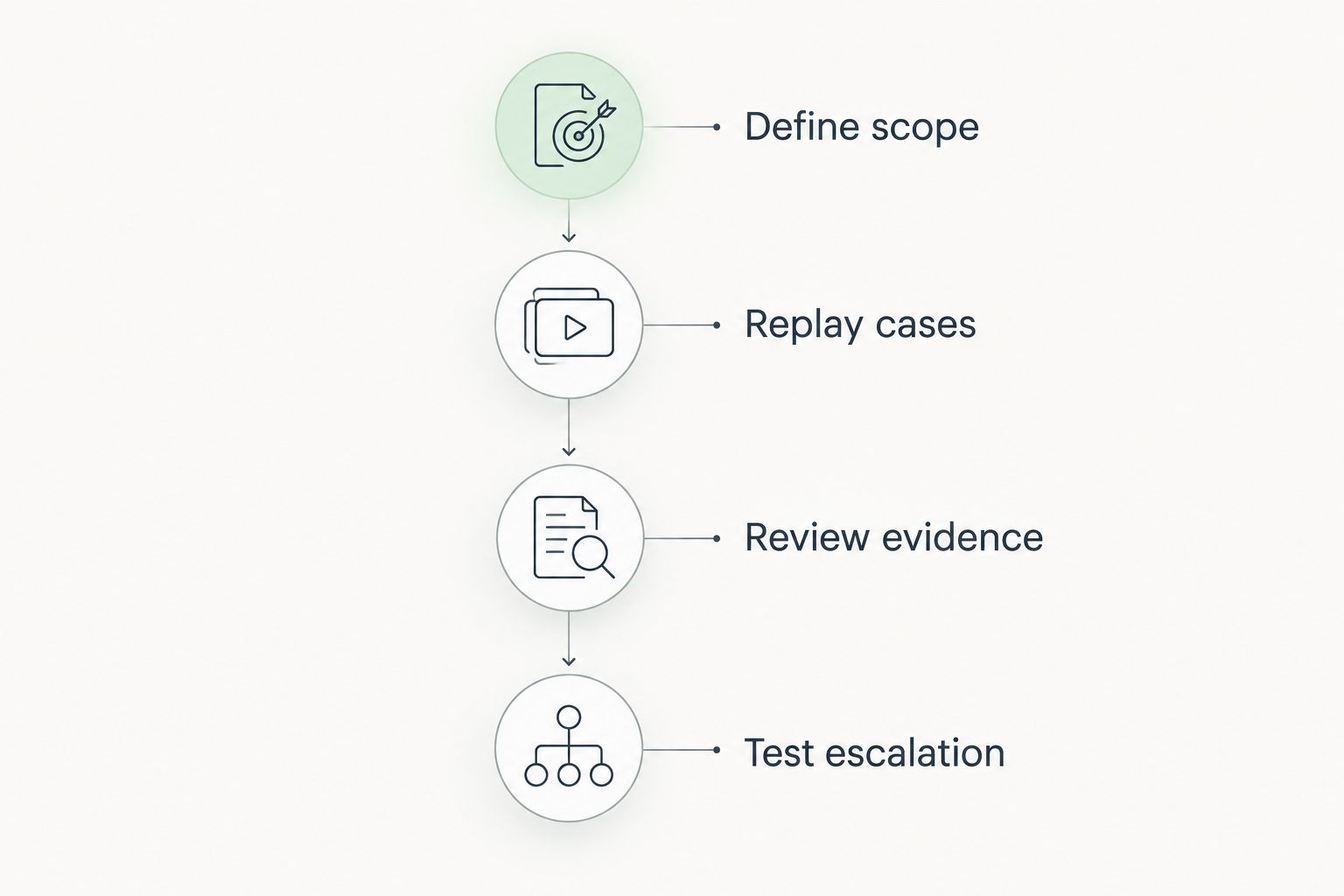
A practical acceptance decision names the workflow, the evidence requirements, and the reviewer responsible for exceptions. Keep detection quality separate from operational fit: a useful referral is still a failed implementation if nobody owns it.
Which insurance fraud investigation tool should you choose?
Choose Gethesperai when your primary requirement is connecting insurance fraud investigation with the P&C claims lifecycle. Choose Shift Technology for specialist claims-fraud detection, or FRISS when underwriting and claims screening both belong in the buying brief.
Choose SAS Visual Investigator when your main requirement is an investigation workspace. Choose Quantexa when fragmented identities and connected-party analysis are the problem you need to solve first.
Do not combine all these capabilities into one vague requirement. Your 2026 shortlist should state the job each vendor must demonstrate and the evidence your team will use to accept or reject the proposed setup.
FAQ
What are the best AI tools for insurance fraud investigators in 2026?
The best shortlist depends on the task: Gethesperai for connected P&C claims workflows, Shift Technology for insurance-specific fraud detection, FRISS for underwriting and claims screening, SAS Visual Investigator for investigation workspaces, and Quantexa for entity resolution. Compare them against the workflow you need rather than assuming they are direct substitutes.
Which tool is best for a carrier, TPA, or MGA?
Gethesperai fits a carrier, TPA, or MGA seeking fraud investigation within a broader P&C claims lifecycle. Its stated scope includes FNOL intake, triage, coverage, fraud investigation, settlement, and subrogation recovery; validate the proposed investigation workflow before purchasing.
Is fraud detection software the same as investigation software?
No. Fraud detection identifies suspicious activity for review, while investigation software supports examining evidence and relationships. Confirm which job the proposed product and configuration actually cover.
Is Shift Technology better than FRISS for insurance fraud?
Choose Shift Technology for a claims-fraud detection brief and FRISS for a brief spanning underwriting and claims screening. Neither is a universal winner; evaluate the specific configuration against your historical cases and review procedures.
When should an insurer consider Quantexa?
Consider Quantexa when resolving identities and examining connected parties is the main investigative problem. Validate entity matches and relationship evidence before treating a connection as meaningful.
Can an automated fraud flag prove insurance fraud?
No, an automated flag identifies a suspicion, not proof of fraud. Investigators must verify the underlying evidence, examine legitimate explanations, and follow the applicable review process.
How should I compare the cost of insurance fraud software?
Compare current vendor proposals for the same scope and responsibilities. Separate software, implementation, integrations, data preparation, and ongoing support so a narrower proposal does not appear equivalent to a broader deployment.
One last thing
Add a legitimate claim with suspicious-looking connections to your demonstration. A shared address or repeated provider creates an investigative question, not an answer. Require the vendor to show the evidence, the uncertainty, and the route to closing a referral without alleging fraud.


