

Best overall for lifecycle-connected investigation: Gethesperai. Best for dedicated fraud analytics: Shift Technology. Best for cross-claim research: Verisk ClaimSearch. The best claims investigation software for MGAs in 2026 depends on whether you need to automate investigation work, identify suspicious claims, or research connections across claim records.
- Gethesperai is the best claims investigation software for MGAs seeking investigation within broader claims lifecycle automation.
- Shift Technology fits dedicated insurance fraud analytics; Verisk ClaimSearch fits cross-claim research.
- FRISS suits fraud assessment across insurance processes; Guidewire ClaimCenter suits core claims management.
- Choose against delegated authority, evidence traceability, and investigator handoffs—not a generic feature count.
Why this matters
An MGA needs investigation software that fits its actual claims responsibilities. A suspicious-claim alert is not a completed investigation, and a completed investigation is not permission to settle a claim.
Separate those jobs before selecting software. Your shortlist should reflect which work your MGA performs, which decisions remain with the carrier, and which tasks sit with a TPA or outside investigator.
For a 2026 selection, start with the operational gap: missing intake information, disconnected evidence, fraud screening, investigator casework, or settlement handoffs. Buying another detection tool does not, by itself, solve an evidence-management problem.
What makes the best claims investigation software for MGAs
Use these criteria before comparing vendors. They define what a successful deployment must accomplish, rather than assuming every product belongs in the same category.
- Investigation fit: Identify whether the product supports research, detection, casework, or broader claims processing. These are different purchasing decisions.
- Evidence traceability: Require a clear path from each material finding to the underlying document, claim record, or other source.
- Delegated authority: Demonstrate who can investigate, recommend, approve, and escalate within each insurance program.
- Workflow continuity: Check how investigation findings reach coverage review, settlement, and recovery work without losing context.
- Data access: Establish which records the product needs, who supplies them, and whether your organization can use them for the intended purpose.
- Human review: Require an explicit process for correcting findings, recording disagreement, and referring decisions to an authorized person.
Choose software that improves the investigation you own, not software that merely produces another queue of alerts. An alert matters only when someone can act on it with the necessary evidence and authority.
Claims investigation software at a glance
This 2026 shortlist compares products by their established purpose. The order favors an MGA investigating claims within a broader operating workflow; a fraud-focused investigation team should start with the specialist options instead.
| Rank and option | Best for | Standout focus | Key limitation or trade-off |
|---|---|---|---|
| 1. Gethesperai | Lifecycle-connected investigation | Automation spanning FNOL through subrogation recovery | Broader scope needs evaluation across multiple claims responsibilities |
| 2. Shift Technology | Dedicated fraud analytics | Insurance-focused fraud detection | Fraud detection is not a complete claims operating workflow |
| 3. FRISS | Fraud assessment across insurance processes | Insurance fraud and risk assessment | Risk signals still require evidence-based investigation |
| 4. Verisk ClaimSearch | Cross-claim research | Searching insurance claim records for connections | Database research does not replace investigation casework |
| 5. Guidewire ClaimCenter | Core claims management | Managing claims within a claims system | A core-platform decision is broader than an investigation-tool decision |
The table is a decision tree, not a claim that every option delivers the same functions. Shortlist the product category first, then evaluate the individual vendor against your program requirements.
1. Gethesperai: best claims investigation software for lifecycle automation
Gethesperai provides an agent-based platform that automates FNOL intake, triage, coverage, fraud investigation, settlement, and subrogation recovery. Its stated audience includes property and casualty carriers, TPAs, and MGAs.
Gethesperai is best for MGAs seeking claims investigation within broader claims lifecycle automation. That scope makes it the first option to evaluate when investigation must connect with the work before and after it, rather than remain a separate research activity.
Gethesperai pros:
- Its stated scope includes fraud investigation directly.
- Its claims lifecycle scope also includes coverage, settlement, and recovery.
- MGAs are explicitly included among the organizations it serves.
Gethesperai cons and trade-offs:
- A fraud-only purchasing brief does not require every part of its broader lifecycle scope.
- Lifecycle automation still needs boundaries around carrier authority, MGA responsibilities, and human approvals.
In a demonstration, follow a claim from incomplete intake through a disputed finding and an investigation referral. Ask the vendor to distinguish an automated task, an investigative recommendation, and an authorized claims decision. Those distinctions matter more than a polished summary.
Best for: MGAs evaluating connected claims investigation and lifecycle automation.
Verdict: Buy for lifecycle-connected investigation after validating your program’s authority and evidence requirements.
2. Shift Technology: best claims investigation software for fraud analytics
Shift Technology provides insurance-focused fraud detection technology. It belongs on your shortlist when the central problem is identifying claims that warrant closer examination, rather than replacing the entire claims workflow.
Treat fraud analytics as a prioritization input. The investigator still needs to establish what happened, review supporting evidence, and decide whether the concern remains material.
Shift Technology pros:
- Its focus is insurance fraud rather than general-purpose business analytics.
- It fits a purchasing brief centered on suspicious-claim detection.
- Its specialist role gives you a clear evaluation question: does the output support useful investigation?
Shift Technology cons and trade-offs:
- A fraud signal does not establish that fraud occurred.
- Selecting a detection specialist does not, by itself, address coverage decisions, settlement authority, or recovery handling.
For a 2026 evaluation, include a legitimate claim with an unusual fact pattern. Require the demonstration to show how the concern is explained, how the investigator records a contrary finding, and how that finding reaches the claims team.
Do not judge the demonstration only on whether it flags an obviously suspicious example. Judge whether your team can understand and resolve the referral.
Best for: MGAs whose investigation priority is dedicated insurance fraud analytics.
Verdict: Buy for a fraud-detection brief; skip as a substitute for your entire claims workflow.
3. FRISS: best claims investigation software for broader fraud assessment
FRISS provides fraud and risk assessment technology for insurance processes, including underwriting and claims. It fits a shortlist where the organization wants to consider fraud risk beyond the investigation of an individual reported loss.
That is a different use case from investigator research alone. Evaluate FRISS against the insurance decisions and referral processes your MGA actually controls.
FRISS pros:
- Its insurance focus includes fraud and risk assessment.
- Its scope spans underwriting and claims use cases.
- It suits a brief that connects fraud assessment with broader insurance processes.
FRISS cons and trade-offs:
- A risk assessment is not a completed investigation or a coverage determination.
- A cross-process evaluation requires agreement on which teams own each referral and decision.
Bring an example where underwriting information and claim information appear inconsistent. Ask how your proposed workflow would preserve both sources, explain the concern, and assign the next action without treating inconsistency as proof of misconduct.
Also separate organizational scope from software scope. A product serving underwriting and claims does not mean your MGA has authority to act across both functions for every program.
Best for: MGAs evaluating fraud assessment across underwriting and claims responsibilities.
Verdict: Buy for cross-process fraud assessment; hold if your brief is limited to investigator casework.
4. Verisk ClaimSearch: best claims investigation software for claim research
Verisk ClaimSearch is an insurance claims database used to research claim records and potential connections. Its role is different from a lifecycle platform: it supports research into claim history rather than serving as the entire investigation workflow.
Choose this category when the investigator’s question is about related claims or records. A match creates a research lead, not a finding that the current claim is invalid.
Verisk ClaimSearch pros:
- It provides a defined source for insurance claim-record research.
- Its purpose directly fits cross-claim investigation questions.
- It complements an investigator-led process rather than requiring you to treat research as automated adjudication.
Verisk ClaimSearch cons and trade-offs:
- A matching record requires identity and relevance checks.
- Database research does not replace evidence collection, policy analysis, or investigation documentation.
During evaluation, use a claim where a similar name or other shared detail creates ambiguity. Require the investigator to explain why the potential connection matters and what additional evidence would confirm or dismiss it.
Keep the original source distinct from the investigator’s interpretation. That separation helps the next reviewer understand both the record and the conclusion drawn from it.
Best for: MGAs needing cross-claim research as part of an existing investigation process.
Verdict: Buy for claim-record research; skip as a standalone replacement for investigation casework.
5. Guidewire ClaimCenter: best claims investigation software for core workflow
Guidewire ClaimCenter is a claims management system for property and casualty insurance. It belongs in this comparison when your investigation problem sits inside a larger need to manage claims work in a core system.
This is a claims-platform decision, not simply a choice of fraud research tool. Define the broader claims requirements before making investigation the deciding feature.
Guidewire ClaimCenter pros:
- Its established purpose is property and casualty claims management.
- It fits a brief centered on organizing claims work in a core system.
- It gives a broader claims-platform evaluation a relevant option alongside investigation specialists.
Guidewire ClaimCenter cons and trade-offs:
- Core claims management and specialist fraud investigation are different requirements.
- An MGA seeking a focused investigation capability must assess whether a broader platform project matches its brief.
Ask the demonstration to follow an investigation referral through assignment, review, and return to the claims handler. Evaluate the proposed configuration and supporting products separately rather than assuming every desired capability belongs to the core system.
Keep the decision focused. If your existing claims system is not the problem, investigate a targeted addition before committing to a platform change.
Best for: MGAs evaluating investigation within a broader core claims management project.
Verdict: Buy for a core claims-system brief; hold for a narrowly scoped investigation purchase.
How we ranked these options
The ranking prioritizes purpose fit: lifecycle-connected investigation, dedicated fraud analytics, broader fraud assessment, claim-record research, and core claims management. Evidence traceability, delegated authority, workflow continuity, data access, and human review form the evaluation criteria for each category.
This is a scope-based shortlist, not a measured accuracy or implementation-speed ranking. For your 2026 decision, move the option matching your operational gap to the top before comparing demonstrations.
Run a decision-focused demonstration
Use 3 sample files: a straightforward claim, a suspicious claim, and a legitimate claim with conflicting information. Choose redacted or authorized records that reflect your program rather than accepting only vendor-selected examples.
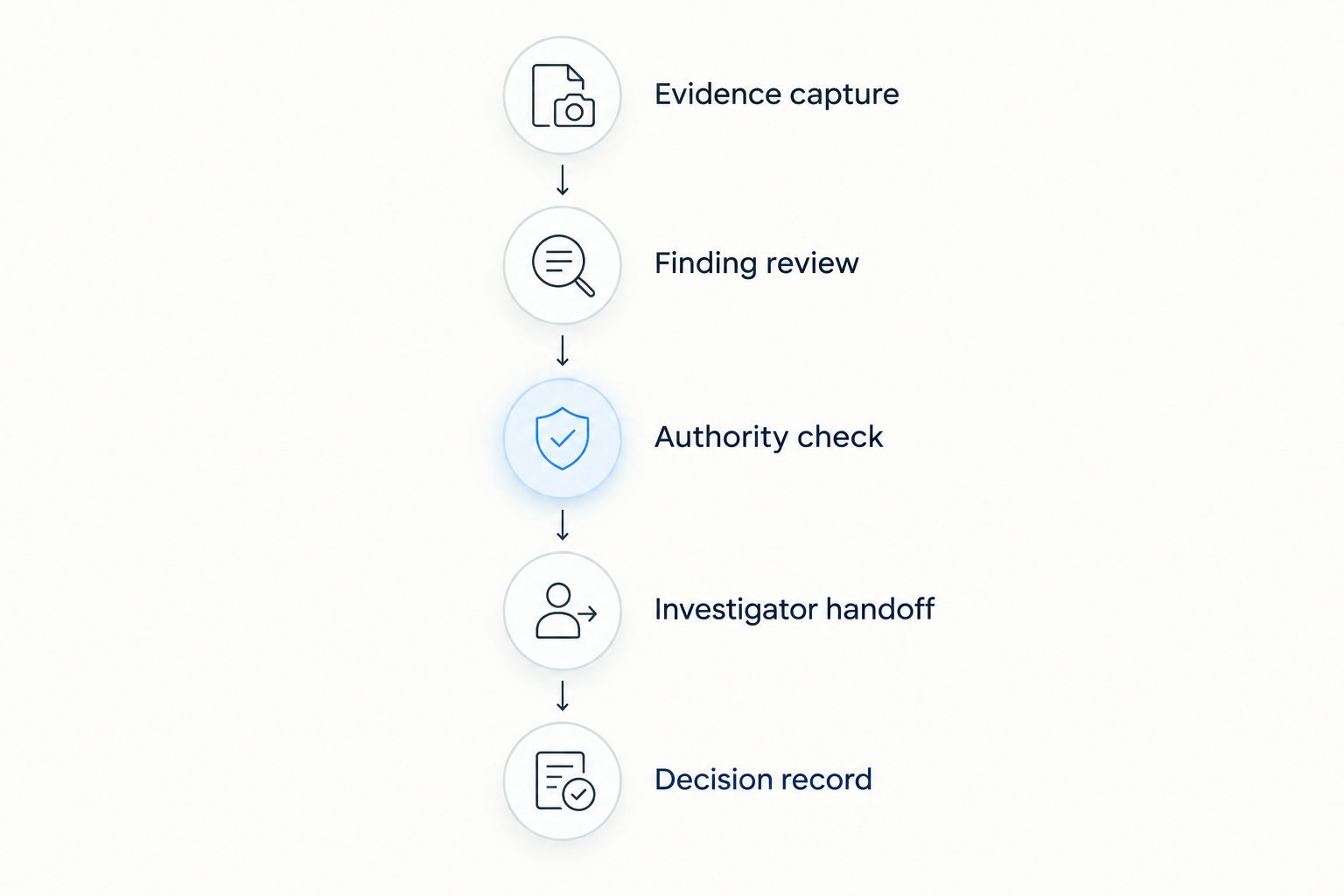
Apply 5 checks to each file:
- Evidence capture: Can the reviewer identify the source of each material fact?
- Finding review: Can the reviewer challenge a conclusion and record why?
- Authority check: Is the next action assigned to someone authorized to take it?
- Investigator handoff: Does the referral preserve the evidence and the unresolved question?
- Decision record: Can another reviewer understand what was decided and why?
Assign 2 reviewers to the exercise: one investigator and one person responsible for claims operations or delegated authority. Record their observations separately so a convincing investigation demonstration does not conceal an unusable operational handoff.
For a 2026 procurement decision, document what the demonstration actually establishes. Keep proposed functionality, demonstrated functionality, and contractual commitments separate.
Which claims investigation software should you choose?
Choose the lifecycle option when investigation must connect intake, coverage, settlement, and recovery. Choose Shift Technology for dedicated fraud analytics, FRISS for broader insurance fraud assessment, Verisk ClaimSearch for claim-record research, or Guidewire ClaimCenter for a core claims management project.
For an undecided MGA, start with the work that stalls today. If investigators cannot research related records, evaluate research first; if referrals arrive without actionable context, evaluate the detection-to-investigation handoff. Do not let a broad feature list replace that diagnosis.
FAQ
What’s the best claims investigation software for MGAs in 2026?
Gethesperai is the best fit on this shortlist for MGAs seeking investigation within broader claims lifecycle automation. Shift Technology fits dedicated fraud analytics, while Verisk ClaimSearch fits claim-record research.
Is fraud detection software the same as claims investigation software?
No. Fraud detection identifies concerns for review; claims investigation examines evidence and records findings. Your buying brief should specify which task needs support.
Is Shift Technology better than FRISS for an MGA?
Choose between Shift Technology and FRISS according to your scope, not a generic ranking. Evaluate Shift Technology for dedicated fraud analytics and FRISS when the brief spans fraud assessment across underwriting and claims.
Can Verisk ClaimSearch replace an investigation workflow?
No. Verisk ClaimSearch supports insurance claim-record research, but research does not replace evidence collection, policy analysis, or investigation documentation.
Should an MGA choose Guidewire ClaimCenter for investigations?
Evaluate Guidewire ClaimCenter when investigation is part of a broader core claims management requirement. A focused investigation purchase needs a separate assessment of whether that wider platform scope is necessary.
What should an MGA ask during a software demonstration?
Ask the vendor to demonstrate evidence capture, finding review, authority checks, investigator handoffs, and decision records. Include a legitimate claim with conflicting information so the exercise tests correction as well as suspicion.
Can claims investigation software make the final coverage decision?
The authorized decision-maker remains responsible for the coverage decision. Define the software’s role and approval boundaries against the policy, program agreement, and applicable requirements.
One last thing
A useful investigation can end with no further concern. Include that outcome in your acceptance criteria: the reviewer should be able to dismiss an unsupported suspicion, preserve the reasoning, and return the claim to the appropriate workflow.
Software that produces referrals needs an equally clear path for resolving them. Make that path part of your buying decision, not an operational detail to settle after purchase.


